TRT: big trail days as body management practice for ultras
Keeping with the theme of - there’s more than enough info out there on how to plan out your TRT effort. I want to talk about big trail days as body management practice for ultra races.
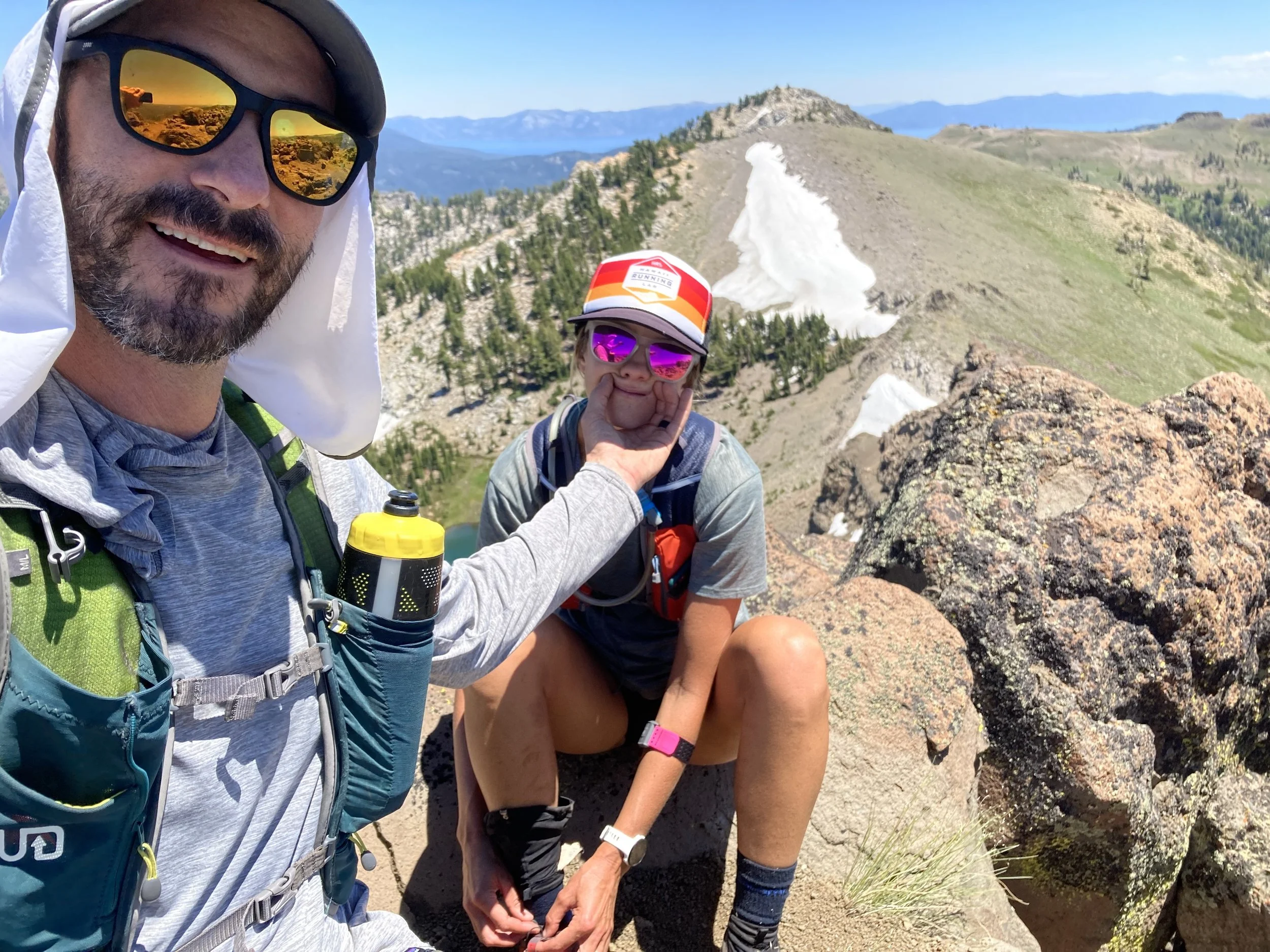
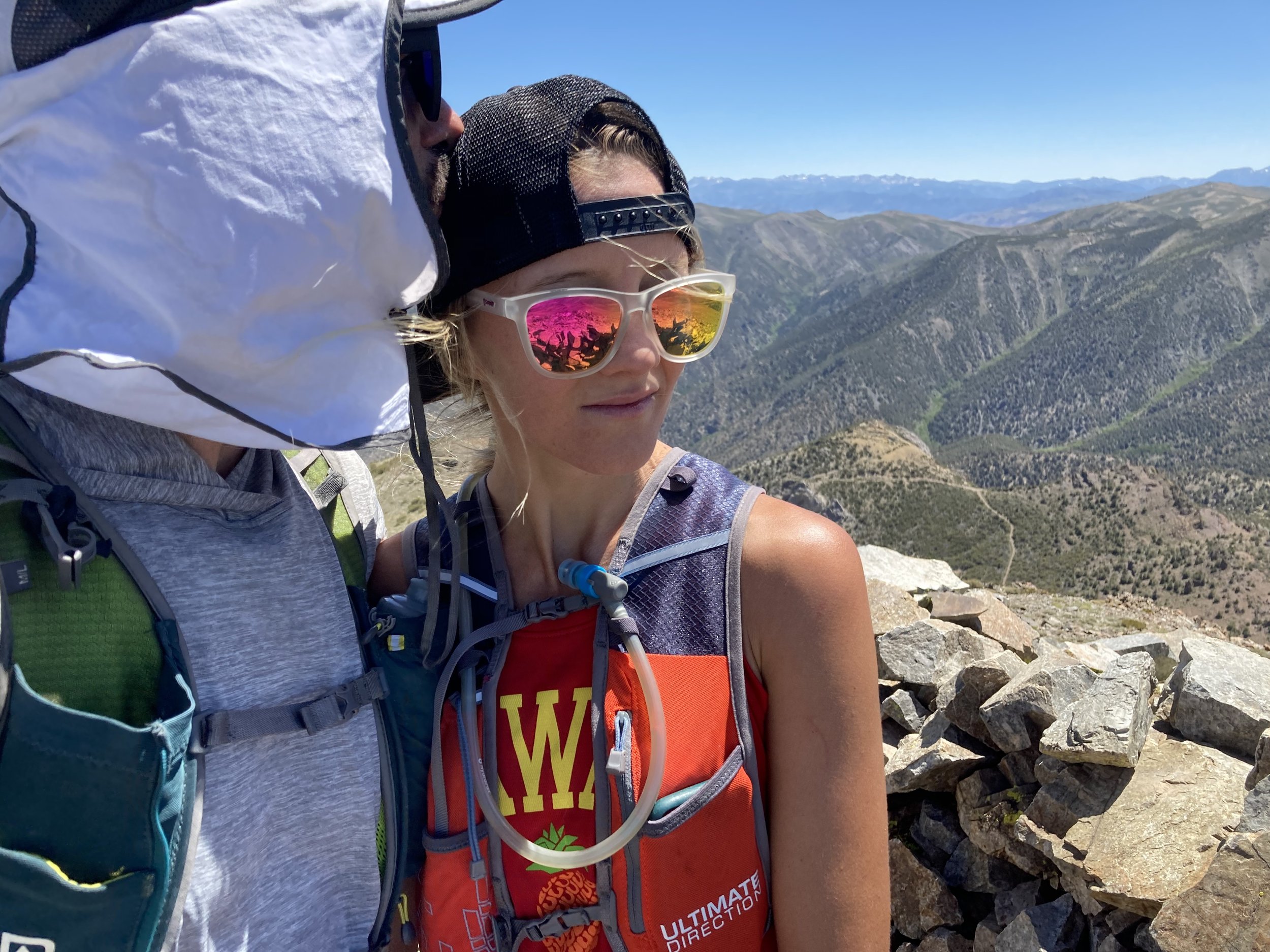
In the summer of 2020, I started spending more time peak bagging. Races were canceled, and Michael and I had heard of this local Tahoe peak list - the Tahoe Oguls.
It consists of 63 peaks in and around the Lake Tahoe Basin - as far north as Adams Peak West (also an SPS) and as far South as Mount Wheeler and Patterson in the Sweet Waters.
Michael decided he wanted to complete the entire list in a summer (he did).
I ended the summer with 11 left to complete.
A lot of these Ogul days ended up being longer than a usual long run in terms of duration, not necessarily miles. I was used to going out for about 3- 4 hours; standard ultra-long run training, and I had decent habits around those durations. But a good chunk of our outings were in the 6-7 hour range, with some peak days closer to 10-12+ hours. Not being used to taking care of myself for these durations on a regular basis, I would royally bonk even with my best intentions around fueling.
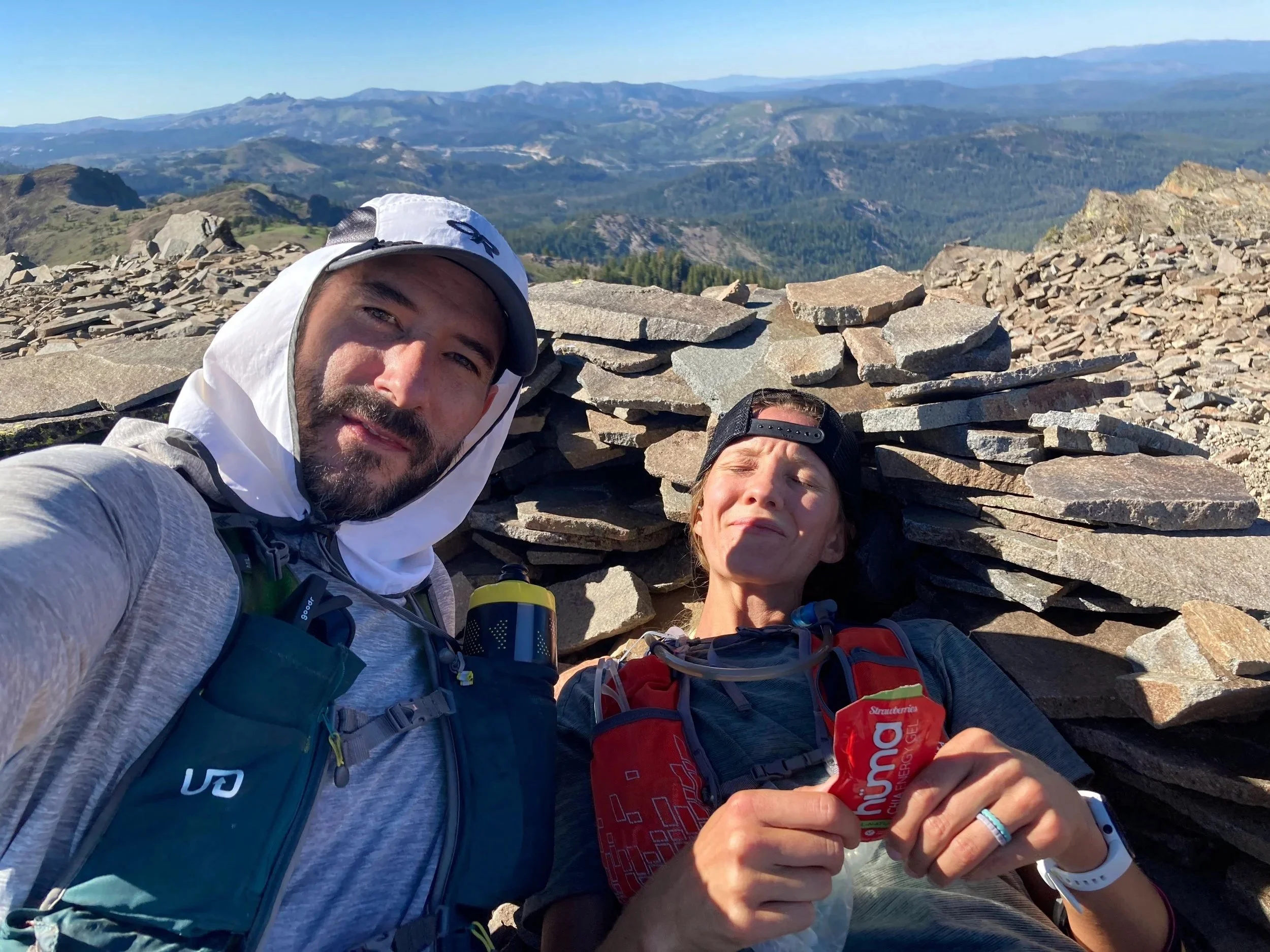
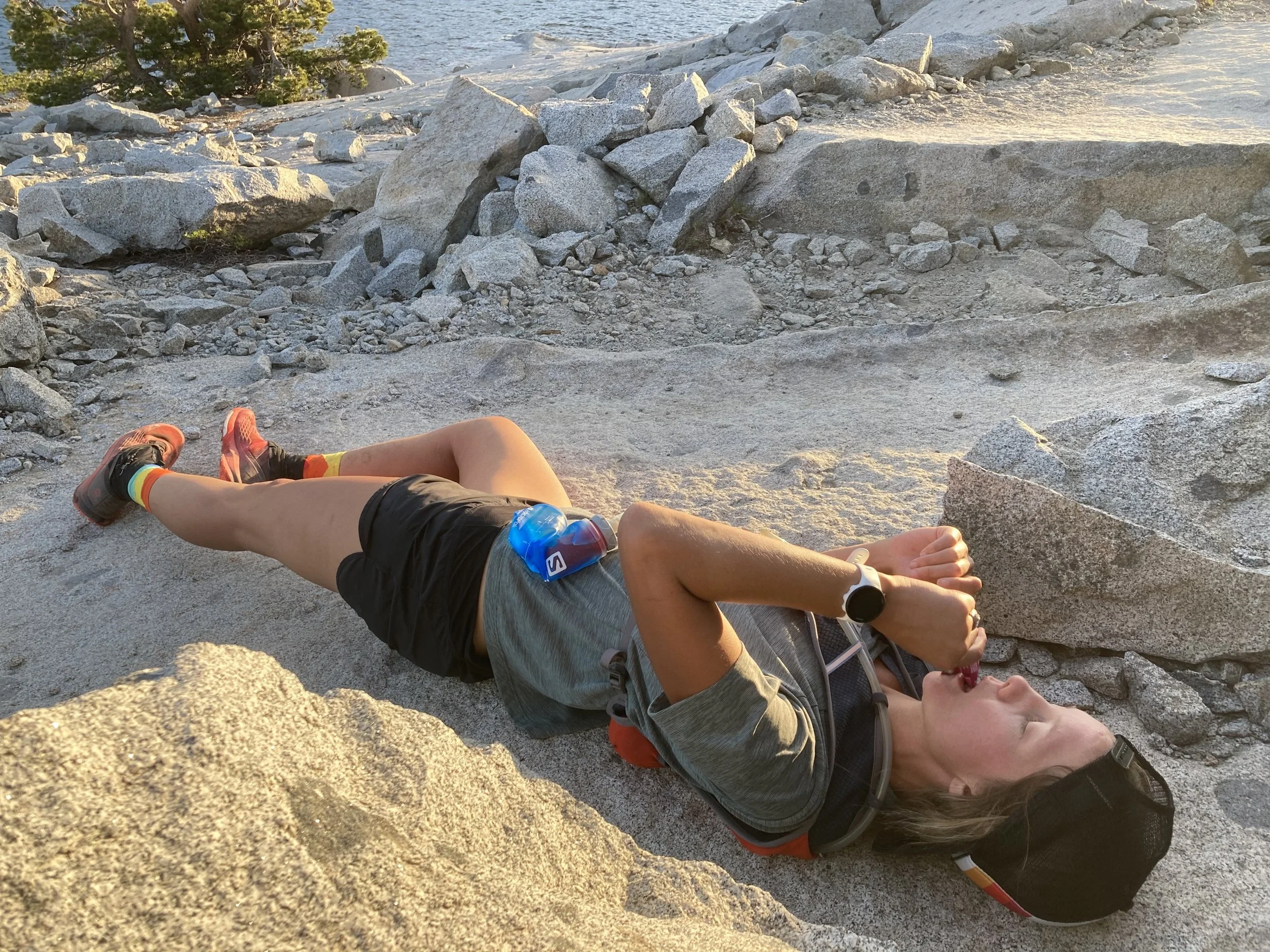
In a way, I’m thankful for all of those bonk experiences because now I know exactly what it feels like. I can recognize even a hint of a bonk and act before I let myself get there. But I’m also thankful for those experiences as a coach. I can talk to it with athletes from a place of having been there myself - and now knowing that it does not have to feel that way. I shared a few photos below of a clearly low-blood-sugar version of me.
Even just 6 years ago, in 2020, fueling was starting to take more of a focus in trail/ultrarunning, but people were still very much talking about calories, not carbs, and Spring Energy was still bamboozling athletes with half of the allotted carbs on their label. I vividly remember feeling so horribly low energy in the middle of our first Desolation 7 Summits effort. I lay in the middle of the trail nursing a spring canaberry, unknowingly getting a whopping 8g of carbs.
I bring all this up because ultrarunning is Body Management.
Sure, you need to have the fitness to run far, which requires running a lot.
But you’ll always “fall” to your ability to manage your body, which can mean a lot of different things, but the heavy hitters are nutrition and hydration.
I like to tell my athletes: it doesn’t matter how fit you are; if your nutrition and hydration habits aren’t there, they will be your limiting factors on race day. Because in any race over 3 hours, nutrition and hydration matter A LOT. There’s no more “getting away” with not getting enough. Getting away in quotes because no one is ever fully getting away with it.
So, to establish good habits and get the nutrition and hydration dialed in, we practice. It really is all about building the habit.
We plan how many carbs per hour we want to consume, how many fluid ounces per hour, and how much sodium per liter.
Then on our long runs we execute it. Rinse and repeat week after week, fine-tuning as needed.
The problem, or “the catch,” is that most of the nutrition-related problems (most, not all) pop up in the later stages of races. Generally, at time frames that exceed your standard long run (most long runs do not exceed 6 hours). This means many nutrition/hydration pitfalls don’t show up during normal training durations. If your only opportunities to practice are your long runs and races, you may not discover them until race day.
The ultra race itself becomes the learning experience with the body management stuff.
The thing I have come to realize over the last six years is that you can get out and practice body management over many hours or days on trails and in the mountains via backpacking, long day hikes, or peak bagging.
For this reason - I LOVE IT when my ultra athletes want to do a backpacking trip, a multi-day thru-hike, peak bagging, or any kind of multi-hour human-powered day in the mountains.
Put yourself in the position of having to manage your body and take care of yourself for many hours in the backcountry, and you will get better at this stuff, even if it results in a bonk and learning the hard way. And it will apply & positively impact your races.
One caveat - the days do need to be big. What I’m not talking about is going on a leisurely backpacking trip where you hike 6-10 miles per day. Or a hike where you’re out for 8 hours but you hike 8 miles and spend most of the time hanging out at a lake. These days do need to be physical, and they need to involve consistent movement for hours to be beneficial.
Practicing your body management habits does not need to include running. It just needs to involve moving for several hours of the day.
Your feet will still need to be cared for
Your sock and shoe choice will matter
Your clothing choices will matter
Chafing potential will show itself
Caffeine can be practiced
What’s easy to chew and get down?
When do you get sick of sugar?
When you do - what can you switch to that’s easy to consume and easy to carry?
How do you combat nausea?
These were all things that popped up for me on the Tahoe Rim Trail even though I was not running a race. I didn’t even run one step over 104 hours. But my feet were in excruciating pain - how do I keep hiking? I consumed over 3000 calories per day. Which meant I was able to get in a lot of run-fuel and real-food practice. What’s easy to get down? What’s difficult or too dry to chew and hike? What sits fine in my stomach even in the heat vs what feels like too much even though I’m “just” hiking. How much water do I need to bring between sections?
None of these were running problems. They were all problems created by spending a really long time moving. (15+ hrs a day in my case).
Move your body for long enough, and all the same things pop up. But in general, when you’re backpacking or hiking, you’re not generating as much training stress as you would by running those durations - so you’re getting the body management practice without the recovery cost of actually running an ultra.
Or, in other words, you get to practice some of the biggest ultra race limiters in a fun, low-consequence setting, without a ton of training disruption.
Get better at the controllables that go into a well-executed ultra, while also going on an unforgettable trip?
Sign me up.
If you’re someone who loves this stuff already - maybe now you just have a different lens to look at these days through. And if you get invited on a backpacking trip or to hike a big mountain with a friend, in the middle of your ultra race block, maybe it can be beneficial rather than a disruption.
Can you sub in these days for all of your long runs? Absolutely not. These are not a replacement for your normal run training. You still need to get in enough run volume for the demands of your ultra event. This is simply an alternative method to still get in practice & experience around some of the ultra performance limiters - without actually having to run an ultra.